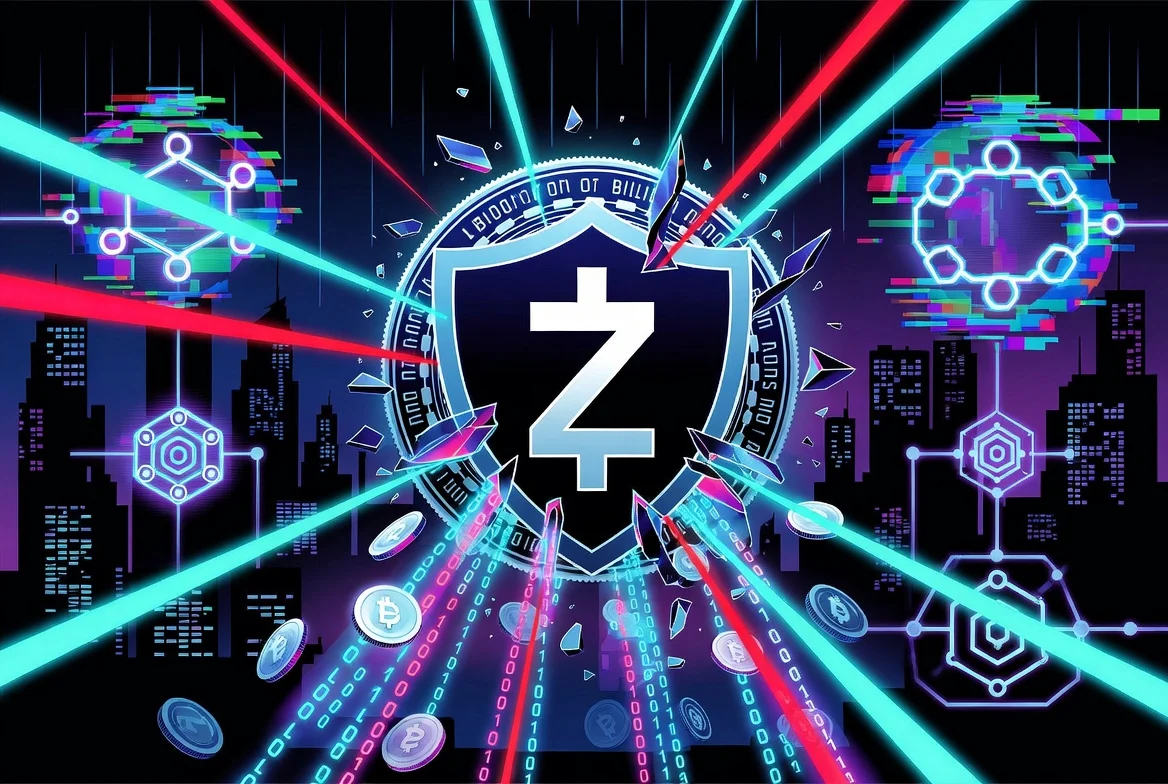
The Zcash network has achieved a significant security milestone after successfully undergoing an automated code examination conducted by artificial intelligence. Zcash founder Zooko Wilcox officially announced that the advanced AI model Mythos, developed by AI research and deployment company Anthropic, recently completed a comprehensive security audit of the Zcash protocol. Initiated at the specific request of Shielded Labs—an independent organization dedicated to the development and enhancement of privacy-preserving cryptographic technologies—the evaluation yielded a reassuring outcome: no new critical or serious bugs were discovered within the protocol’s core architecture.
This development arrives at a critical juncture for the privacy coin sector, which continues to navigate a complex matrix of regulatory hurdles, exchange delisting pressures, and intense technical scrutiny from global financial watchdogs. For Zcash, a pioneering cryptocurrency utilizing zero-knowledge succinct non-interactive arguments of knowledge (zk-SNARKs) to shield transaction metadata, robust protocol security is not merely a feature but an existential necessity. The clean bill of health delivered by Anthropic’s Mythos model provides the project with a vital security headline, reinforcing confidence among its developer community, institutional partners, and privacy-focused user base.
Chronology and Origins of the AI-Assisted Audit
The integration of artificial intelligence into the cybersecurity auditing process for Zcash represents a modern evolution in how complex cryptographic codebases are evaluated. Historically, protocol-level security has relied exclusively on manual code reviews, peer-reviewed academic research, and intensive audits conducted by specialized human cybersecurity firms. While these traditional methods remain the gold standard of software verification, they are often time-consuming, resource-intensive, and limited by the sheer volume of human hours required to analyze millions of lines of complex mathematics and code.
Shielded Labs recognized the potential to supplement these conventional human-led audits with cutting-edge machine learning capabilities. By engaging Anthropic to deploy its Mythos model—a sophisticated AI architecture optimized for advanced reasoning, pattern recognition, and code comprehension—Shielded Labs sought to test the boundaries of automated vulnerability detection. The audit was commissioned quietly and executed over a rigorous testing period, culminating in Wilcox’s public acknowledgment on social media platform X in June 2026.
According to the official statements released by project leaders, the Mythos model scanned the protocol’s underlying architecture to identify logical inconsistencies, memory leaks, cryptographic edge cases, and potential attack vectors. The resulting report confirmed that the automated scan did not unearth any previously unknown, severe vulnerabilities that could compromise the integrity or confidentiality of the Zcash network.
The Expanding Role of AI in Blockchain Cybersecurity
The deployment of Anthropic’s Mythos model for the Zcash audit underscores a broader, accelerating trend within the digital asset ecosystem: the integration of artificial intelligence into blockchain infrastructure and security maintenance. As decentralized protocols grow increasingly sophisticated—incorporating complex scaling solutions, cross-chain bridges, and advanced cryptographic primitives—the attack surface for malicious actors expands exponentially.
Security firms and blockchain foundations are increasingly turning to machine learning models to augment human oversight. AI tools excel at rapidly parsing massive, intricate codebases, identifying subtle recurring patterns, and simulating thousands of potential edge cases in a fraction of the time required by human auditors. However, industry experts emphasize that artificial intelligence currently serves as a force multiplier rather than a complete replacement for human expertise. While AI can efficiently highlight anomalies, flag suspicious code structures, and narrow down areas of concern, human cryptographers and developers must interpret the findings, verify the context, and implement necessary patches.
Wilcox’s framing of the audit reflected this balanced perspective. He noted that while AI-assisted review is an invaluable asset for scanning complex software, it is deployed alongside ongoing, rigorous human security hardening efforts. Shielded Labs and independent contributors have indicated that safety evaluations and code optimizations will continue unabated, ensuring that the protocol remains resilient against evolving threat vectors.
Technical Implications and the High Bar for Privacy Protocols
In the realm of decentralized finance and privacy-centric technologies, the tolerance for software bugs is exceptionally low. Unlike traditional web applications where a software patch can be deployed silently to fix a vulnerability, public blockchain protocols operate on immutable ledgers. A serious protocol-level bug—such as a consensus failure, a double-spend vulnerability, or a flaw that compromises zero-knowledge privacy guarantees—can have catastrophic consequences, potentially eroding user trust and threatening the fundamental utility of the network.
Privacy coins face a unique paradox: they must provide absolute mathematical certainty regarding the confidentiality of transactions while maintaining complete transparency and audibility of their open-source codebases. Because third parties cannot easily inspect on-chain transaction histories due to cryptographic shielding, the underlying protocol code must be flawless.
The absence of newly discovered serious bugs during the Mythos audit does not imply that the Zcash protocol is entirely infallible or immune to future exploits. Software engineering is an iterative process, and complex cryptographic systems are continuously subjected to new analytical techniques. Nevertheless, the successful navigation of an advanced AI audit provides a tangible vote of confidence. It suggests that the rigorous academic foundations and peer-reviewed designs that went into Zcash’s core implementation continue to hold up under cutting-edge computational scrutiny.
Market Context and Broader Industry Impact
From a broader market perspective, the Zcash audit story highlights a fundamental maturation within the cryptocurrency industry. Over successive market cycles, the narrative surrounding digital assets has shifted perceptibly. While short-term price momentum, speculative trading, and macroeconomic liquidity events continue to dominate retail headlines, institutional participants and serious developers are placing unprecedented emphasis on underlying infrastructure, security protocols, governance models, and regulatory compliance.
Projects that proactively invest in security audits—whether through traditional cybersecurity powerhouses or innovative AI-driven assessments—position themselves more favorably in an increasingly competitive landscape. For Zcash, navigating regulatory pressures in various global jurisdictions requires a proactive posture regarding security and transparency. By demonstrating that its codebase is actively monitored, stress-tested, and evaluated using the most advanced technological tools available, the project mitigates some of the technical risks that often deter institutional adoption.
Furthermore, the involvement of Shielded Labs illustrates the changing institutional scaffolding supporting privacy-preserving technologies. Independent development hubs and research organizations are increasingly stepping up to fund, direct, and oversee infrastructure improvements, decoupling the network’s technical evolution from any single entity or foundation.
Future Outlook and Next Steps
As the dust settles on the initial announcements surrounding the Anthropic Mythos audit, observers and protocol developers are awaiting further technical disclosures. Key details to watch in the coming weeks include whether Shielded Labs or contributing developers publish comprehensive technical documentation detailing the exact code versions analyzed, the specific commit ranges reviewed, the configuration parameters of the AI model, and any minor non-critical recommendations generated during the scan.
Transparency regarding these technical metrics will be essential for satisfying the cryptographic and developer communities, who traditionally demand verifiable proof rather than high-level summaries. Additionally, the broader community will be monitoring how Shielded Labs integrates these AI-driven methodologies into ongoing, long-term security roadmaps.
Ultimately, the Zcash protocol’s encounter with Anthropic’s Mythos model marks a noteworthy intersection of artificial intelligence and privacy-preserving cryptography. While the exercise was designed as a defensive precaution rather than a promotional campaign, the resulting headline serves as a reaffirmation of the protocol’s structural integrity. As both artificial intelligence and blockchain technology continue to evolve at a rapid pace, the synergy between automated security tooling and human cryptographic oversight is poised to become an indispensable pillar of Web3 infrastructure development.