
The modern digital economy has fundamentally transformed how artists, creators, and developers monetize their intellectual property, largely driven by the explosive adoption of Non-Fungible Tokens (NFTs) and emerging blockchain standards like BRC-20 tokens. While traditional digital media could easily be copied and distributed without compensation to the original creator, decentralized ledger technology provides an immutable mechanism to establish verifiable ownership, authenticity, and scarcity. For artists, this paradigm shift offers unprecedented direct control over their revenue streams, bypassing traditional intermediaries such as galleries, record labels, and publishing houses. Beyond fine art and digital collectibles, NFTs have evolved into powerful instruments for community building, granting exclusive utility, enabling ticketing access, and executing decentralized fundraising initiatives.

Despite the undeniable creative allure and financial potential of tokenizing digital assets, entering the ecosystem requires a rigorous understanding of the underlying technologies. Creators must navigate the complexities of distributed ledger networks, smart contract mechanics, and variable transaction fees, commonly known as gas fees. Furthermore, market participants must remain cognizant of the rapidly shifting regulatory frameworks surrounding digital property, intellectual property rights, and tax obligations across various global jurisdictions. Establishing a sustainable Web3 strategy demands careful risk assessment, technical literacy, and a strategic approach to resource allocation. By examining the foundational mechanics of NFTs and adhering to systematic deployment processes, creators can effectively leverage blockchain architecture while mitigating common operational pitfalls.
Understanding the Mechanics of Non-Fungible Tokens

To comprehend the process of minting digital assets, one must first understand what distinguishes a non-fungible token from traditional cryptocurrencies. Fungible digital assets, such as Bitcoin (BTC) or Ethereum (Ether), are interchangeable on a one-to-one basis; one Bitcoin holds the exact same monetary value and utility as any other Bitcoin. In contrast, NFTs are cryptographic tokens that represent unique assets, where each unit carries distinct metadata, a specific identifier, and properties that cannot be directly exchanged for another item on an equivalent basis. This uniqueness makes them ideal for representing rare digital artwork, music compositions, virtual real estate, in-game assets, and identity credentials.
The lifecycle of an NFT relies entirely on smart contracts—self-executing programs stored on a blockchain that automatically execute when predetermined conditions are met. These smart contracts dictate the rules of transfer, royalty distributions, and total supply limits for a given collection. While early NFT activity was largely concentrated on the Ethereum blockchain due to its pioneering role in smart contract implementation, alternative networks such as the Binance Smart Chain, Polygon, Solana, and Avalanche have since gained substantial market share. Decentralized marketplaces serve as the primary user-facing portals for interacting with these smart contracts, providing intuitive interfaces where collectors and creators can trade, auction, and discover unique digital property without relying on centralized authorities.
Historical Context and Evolution of the NFT Market
The concept of colored coins on the Bitcoin blockchain in 2012 laid the intellectual groundwork for non-fungible digital assets, but the modern NFT ecosystem truly began to take shape with the launch of Ethereum-based projects like CryptoPunks and CryptoKitties in 2017. CryptoKitties famously congested the Ethereum network during its peak popularity, demonstrating both the massive consumer appetite for digital collectibles and the critical scalability limitations of early blockchain infrastructures.
The subsequent 2020-2021 bull market catalyzed an unprecedented explosion in NFT adoption, propelling trading volumes into the billions of dollars and thrusting digital art into mainstream cultural discourse. High-profile sales by auction houses like Christie’s and Sotheby’s, alongside viral digital art sales by creators such as Beeple, transformed NFTs from a niche cryptographic experiment into a globally recognized asset class. As the market matured following the subsequent macroeconomic contractions and crypto market corrections, the industry shifted its focus from speculative hype toward tangible utility, technological refinement, and institutional-grade infrastructure. Today, prominent platforms like OpenSea, Blur, and Magic Eden continue to refine the user experience, lowering the technical barriers to entry for everyday creators seeking to deploy their own smart contracts.
Step-by-Step Guide to Deploying a Smart Contract on OpenSea
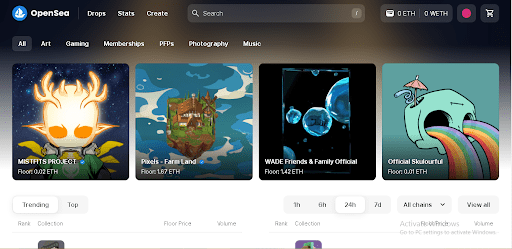
For creators embarking on their first tokenization journey, utilizing an established decentralized marketplace provides a structured and secure pathway. OpenSea remains one of the largest and most widely adopted decentralized marketplaces built primarily on the Ethereum Virtual Machine (EVM) ecosystem. Deploying a custom smart contract and minting an NFT through OpenSea Studio requires a methodical approach, beginning with the integration of a Web3-compatible cryptocurrency wallet.
Step 1: Connecting a Web3 Wallet
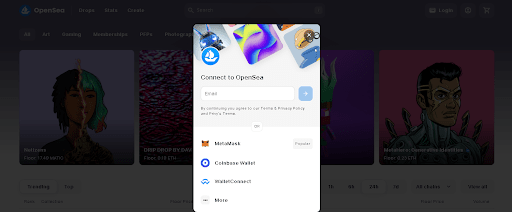
The initial phase involves navigating to the official OpenSea platform and establishing a secure connection via a Web3-compatible crypto wallet, such as MetaMask, Coinbase Wallet, or Rabby. This wallet acts as the user’s digital identity and vault, storing both the funds required to pay for transaction fees and the newly minted tokens. Security best practices mandate the safe storage of seed phrases and the utilization of hardware wallets for high-value asset management.
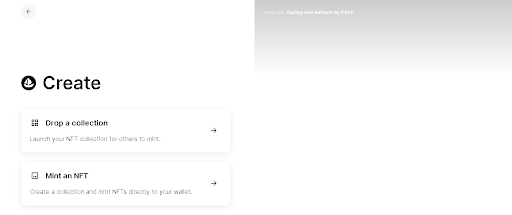
Step 2: Accessing OpenSea Studio and Deploying a Smart Contract
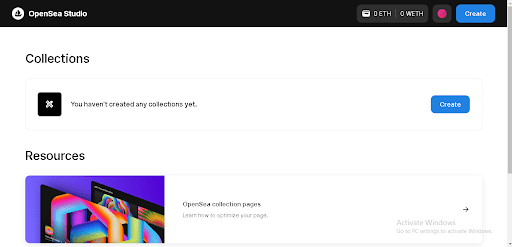
Once the wallet is successfully connected, users must access their profile settings and select the "Studio" option from the interface menu. OpenSea Studio serves as a dedicated deployment suite for creators. Within this dashboard, users initiate the contract creation process by supplying essential metadata, including a collection logo, a distinct contract name, and a unique token symbol. Creators must also select their preferred EVM-compatible blockchain network, keeping in mind that deploying a smart contract requires paying a network gas fee to miners or validators. Because gas fees fluctuate dynamically based on network congestion, timing the deployment during periods of lower network activity can significantly reduce upfront capital expenditures.
Step 3: Executing the Transaction and Verification
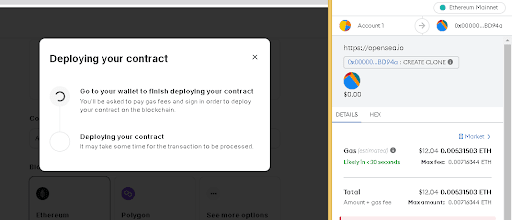
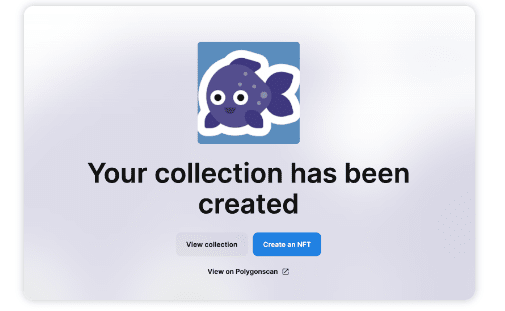
After configuring the smart contract parameters, the creator proceeds by confirming the transaction within their connected Web3 wallet. This action broadcasts the deployment code to the blockchain network, permanently establishing the collection’s rules and parameters. Once the transaction achieves the required network confirmations, the creator receives a formal notification confirming successful deployment, unlocking the ability to mint individual tokens directly into the newly established collection.
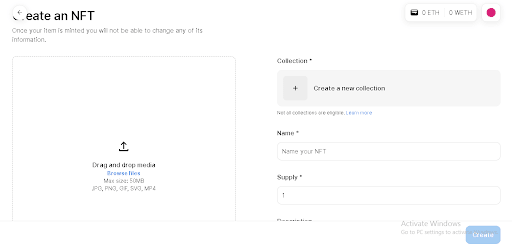
Minting and Finalizing the Digital Asset
With the smart contract successfully deployed to the blockchain, the creator is fully equipped to mint individual tokens. A critical technical consideration at this stage is the choice of token standard. The ERC-1155 standard, for instance, allows for semi-fungibility, enabling creators to mint multiple identical copies of a specific digital asset under a single contract, whereas standards like ERC-721 typically govern strictly unique, one-of-one items. Once minted, the transaction is immutable; the metadata and ownership parameters are permanently recorded on the distributed ledger and cannot be altered or edited.
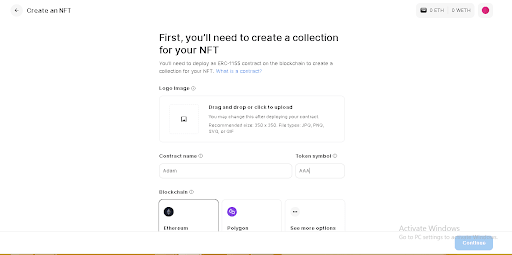
To complete the minting process, creators upload their digital media file—representing the underlying artwork, video, or collectible—into the OpenSea Studio interface. The creator then assigns a descriptive name, provides a detailed biographical or contextual description, and specifies the total item supply. If the supply is set to one, the asset becomes an exclusive one-of-one edition. Clicking the final "Create" button prompts a final transaction signature request within the user’s wallet. Upon approving the gas fee and allowing the network to process the request, the digital asset is officially minted, appearing directly in the creator’s wallet as verified, blockchain-secured property ready for exhibition, distribution, or commercial sale.
Implications, Market Outlook, and Broader Economic Impact
The democratization of digital asset creation carries profound implications for the global creative economy. By eliminating traditional gatekeepers, blockchain technology empowers independent artists, musicians, and developers to retain full sovereignty over their work while establishing automated, trustless royalty structures via smart contracts. These programmatic royalties ensure that creators continue to benefit from secondary market sales, a feature historically absent in traditional physical art markets.
However, widespread adoption is not without structural challenges. Environmental concerns surrounding energy-intensive proof-of-work consensus mechanisms have largely been alleviated by Ethereum’s transition to proof-of-stake, yet network scalability and high gas fees during peak market periods continue to present barriers for casual participants. Furthermore, regulatory scrutiny regarding digital asset classifications, consumer protection, copyright infringement, and anti-money laundering (AML) compliance remains an evolving landscape. Legal experts emphasize the necessity for clear statutory frameworks to protect creators and collectors alike from digital fraud and unauthorized duplication of off-chain intellectual property.
Ultimately, while NFTs and alternative token standards like BRC-20 serve distinct technical functions across separate blockchain architectures, they collectively signify a fundamental evolution in how society defines, trades, and values digital property. As underlying infrastructure continues to improve, focusing on user experience, cross-chain interoperability, and regulatory clarity, decentralized tokenization is poised to transition from a speculative novelty into an enduring pillar of the modern digital marketplace. Creators who approach this technological frontier with informed caution, technical diligence, and a clear strategic vision will be best positioned to thrive in the decentralized economy of the future.
