
OpenAI has officially launched GPT-6.1 Terra, a major update to the middle-tier model in its product ecosystem. Announced on Monday, the new model is engineered specifically for everyday office automation, routine administrative workflows, and digital navigation. According to OpenAI, GPT-6.1 Terra delivers significantly faster task execution, enhanced visual understanding of graphical interfaces, and a dramatic reduction in error rates—all while cutting standard API pricing in half compared to its predecessor, GPT-5.6 Terra.
The release marks another milestone in the rapidly evolving landscape of generative artificial intelligence, particularly the race toward fully autonomous agentic workflows. As companies increasingly demand systems capable of executing multi-step tasks independently, OpenAI’s latest release positions cost efficiency and operational speed at the forefront of its commercial strategy.
Understanding Computer-Use Capabilities
At the core of GPT-6.1 Terra’s appeal is its advanced "computer-use" capability. Unlike traditional language models that rely strictly on text inputs and outputs, Terra is built to interact with digital environments much like a human worker. It can interpret what is displayed on a computer screen, navigate through complex software applications, click on specific user interface elements, type out responses, and draft documents autonomously.
This functionality makes Terra ideally suited for standard office environments where administrative tasks consume significant human hours. By handling routine data entry, cross-application navigation, and automated browsing, the model bridges the gap between conversational AI and practical workplace productivity.
For developers, the economic implications are substantial. The 50% price reduction applies directly to standard API rates—the fees developers pay to integrate OpenAI’s intelligence into their own proprietary applications and enterprise software. By lowering the financial barrier to deployment, OpenAI aims to accelerate the adoption of agentic AI across small businesses and large enterprises alike.
Availability Across the OpenAI Ecosystem

GPT-6.1 Terra is rolling out immediately to paying subscribers across several tiers of OpenAI’s ecosystem. The model is now available to users of ChatGPT Plus, ChatGPT Pro, Enterprise, and Edu packages, where it powers advanced operational modes such as ChatGPT Work and Codex.
ChatGPT Work serves as OpenAI’s dedicated agentic environment within the ChatGPT interface. It allows the AI to operate seamlessly across multiple applications, sign into authorized platforms, and complete multi-step tasks on external websites on behalf of the user. Meanwhile, Codex integrates Terra’s enhanced capabilities into programming and software development environments, giving coders a faster and more cost-effective assistant.
However, users utilizing OpenAI’s free tier will not receive Terra. Instead, free accounts continue to operate on the lower-tier GPT-5.6 Luna model, ensuring a clear distinction in capability and resource allocation between free and paid offerings. Meanwhile, users requiring deeply specialized, high-level research or complex software architecture are still directed toward OpenAI’s flagship heavy-duty models, such as GPT-6.1 Sol or GPT-6 Astra.
Performance Benchmarks and Error Reduction
OpenAI has published internal performance metrics highlighting substantial technological leaps in GPT-6.1 Terra over previous iterations. The most notable improvements center on reasoning stability and factual accuracy, particularly when models are subjected to complex, multi-step prompts.
In internal evaluations designed to test a model’s susceptibility to misleading or trick prompts, the rate of factual errors dropped dramatically. When operating at a low reasoning effort setting—which dictates how long the model spends processing before responding—the error rate fell from 53.6% in GPT-5.6 Terra down to just 16.7% in GPT-6.1 Terra. When configured for maximum reasoning effort, the error rate dropped further to 4.3%, representing an 18-point improvement over the older model.
Performance gains were also recorded in standardized programming evaluations. On Terminal-Bench 4.0, a benchmark that tests coding agents on tasks executed directly through a command-line terminal, Terra successfully completed 50.3% of tasks when running at maximum reasoning effort. This is more than double the 21.5% success rate recorded by GPT-5.6 Terra. Furthermore, OpenAI reports that Terra completes execution tasks more than three times faster on average than its sibling models, GPT-6 Astra and GPT-6.1 Sol.
While these benchmarks are based on OpenAI’s internal testing data, they illustrate a broader industry trend: the rapid optimization of mid-tier models to perform specialized tasks traditionally reserved for much larger, more expensive architectures.
A Chronology of the Terra Lineup
The arrival of GPT-6.1 Terra is the latest chapter in a surprisingly dynamic product release cycle that began earlier in the year. The Terra lineage was first introduced on June 26 as part of the GPT-5.6 family. That initial rollout took the form of a limited preview requested under the administration of Donald Trump, reflecting the growing intersection of advanced AI policy and national technological development.
By July 9, OpenAI expanded access, launching Terra to the broader public as a cost-effective alternative designed to match the performance of GPT-5.5 while operating at roughly half the cost.
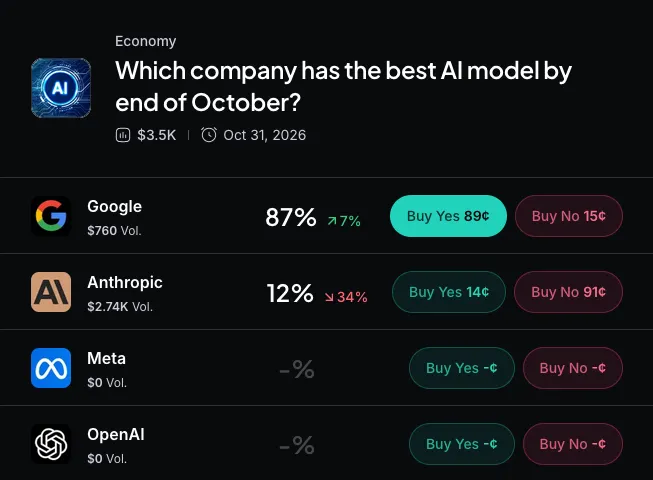
The product roadmap accelerated in September when OpenAI launched GPT-6 Sol and Luna in a surprise release that coincided almost immediately with Anthropic’s unveiling of Claude Opus 5.5. At the time, that September drop did not include an updated Terra model. Monday’s release of GPT-6.1 Terra fills that gap, updating the middle tier to align with the architectural advancements of the newer 6.1 generation.
Broader Industry Implications and Market Impact
The launch of GPT-6.1 Terra arrives amid fierce competition in the artificial intelligence sector. Companies are no longer merely competing on raw intelligence or parameter size; instead, the battleground has shifted heavily toward operational speed, cost efficiency, and practical utility.
By slashing API prices by 50% on a computer-use model, OpenAI is exerting downward pricing pressure on competitors such as Anthropic, Google, and open-source alternatives. For enterprise buyers, the ability to deploy AI agents that can reliably navigate computer screens and execute office tasks at a fraction of previous costs could significantly accelerate corporate automation initiatives.
As AI models transition from conversational chatbots into autonomous digital workers capable of navigating web browsers, managing spreadsheets, and executing terminal commands, the security, reliability, and cost-effectiveness of models like GPT-6.1 Terra will dictate the pace of white-collar digital transformation. While questions surrounding workplace displacement, data privacy, and agent security remain central to the ongoing public debate, OpenAI’s latest release signals that agentic automation is moving rapidly from experimental technology to everyday commercial reality.
