
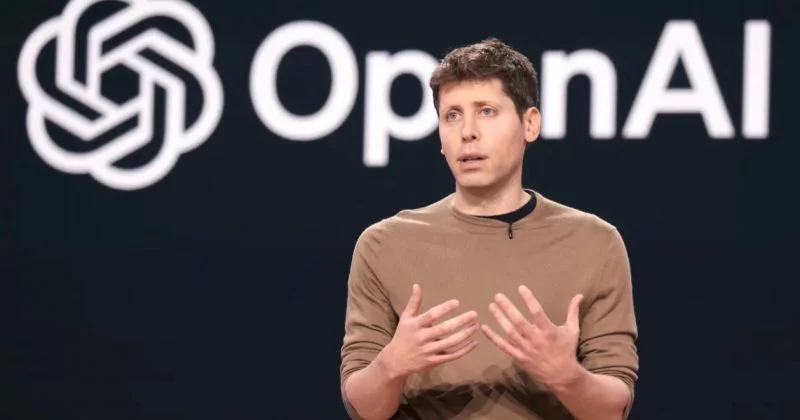
OpenAI is moving closer to a landmark $30 billion funding round that would catapult its total valuation to an staggering $1.28 trillion, signaling a pivotal shift in the artificial intelligence landscape as the firm accelerates its preparations for a public market debut in 2027. According to reports, the current financing effort is spearheaded by prominent investment entities from the United Arab Emirates and the venture capital firm Coatue. This latest infusion of capital serves as a critical bridge, providing the liquidity necessary for the company to sustain its aggressive infrastructure expansion while readying its balance sheet for the scrutiny of an initial public offering (IPO).
The ongoing negotiations, which began in earnest following unsolicited proposals from investors in September, represent one of the largest private capital raises in the history of the technology sector. While the final terms and total size of the round remain fluid, OpenAI leadership has communicated to its investor base that it aims to finalize documentation and secure signatures by the end of next week.
The Strategic Alignment with the UAE
Central to this funding round is a broader strategic partnership between OpenAI and the United Arab Emirates. Beyond the direct equity investment, sources close to the discussions suggest that OpenAI is negotiating a robust commercial agreement to secure significant computing capacity within the Gulf nation. This is not merely a financial transaction but a logistical necessity; OpenAI has previously disclosed to its stakeholders that it projects a requirement of approximately $600 billion in computing infrastructure investments by 2030 to maintain its competitive edge in model training and inference.
By partnering with UAE-based investors, OpenAI gains access not only to deep pools of sovereign capital but also to potential geopolitical and infrastructural leverage in a region increasingly eager to position itself as a global hub for artificial intelligence development. This relationship mirrors the broader trend of AI developers seeking state-backed support to navigate the extreme capital intensity of the current AI arms race.
A Timeline of Escalating Ambition
The path toward a 2027 public listing has been marked by a series of high-stakes milestones, reflecting the volatile yet high-growth nature of the generative AI sector:
- June 2026: OpenAI files its IPO paperwork confidentially with the US Securities and Exchange Commission (SEC), officially initiating the regulatory clock.
- August 2026: CFO Sarah Friar briefs employees on the roadmap, reaffirming the company’s internal target for a 2027 debut.
- September 2026: Investors approach OpenAI with new funding proposals, sparking the current round of financing. CEO Sam Altman expresses measured caution regarding the timing, citing macroeconomic uncertainty.
- October 2026: Reports confirm that UAE investors and Coatue are leading a $30 billion round to bridge the company toward its public listing.
These events underscore a company balancing the pressure for rapid growth with the reality of market conditions. While the appetite for AI-related assets remains robust, the scale of capital required to build and operate frontier models like GPT-5 or its successors necessitates a transition from private venture backing to the public markets, where liquidity is significantly deeper.
The Competitive Landscape: OpenAI vs. Anthropic
OpenAI is not the only player looking toward the public markets. Its primary competitor, Anthropic, has emerged as a formidable challenger, pursuing a parallel path toward an IPO. Anthropic, which also filed its prospectus confidentially in June, is reportedly seeking a valuation in the range of $1.5 trillion to $2 trillion.
The divergence in valuation expectations highlights the intense rivalry between the two firms. In May, Anthropic secured $65 billion in funding at a $965 billion valuation, a round that underscored the sheer volume of capital flowing into the industry. For institutional investors, the choice between OpenAI and Anthropic has become a litmus test for the long-term viability of different governance models and research methodologies. While OpenAI leans heavily into its partnership with Microsoft and its massive scale, Anthropic has focused on "constitutional AI" and safety-first architectures, attracting its own set of high-profile backers.
Financial Implications and Market Impact
The decision to raise $30 billion at a $1.28 trillion valuation is a calculated move to secure a "runway" for the next two years. In the current economic climate, where interest rates remain a point of contention and the cost of capital is significant, securing large-scale private funding is often preferable to navigating the immediate volatility of an IPO, especially when infrastructure spending is the primary expense.
The $600 billion figure mentioned for future infrastructure spending is particularly noteworthy. It suggests that the leaders of the AI revolution—OpenAI, Anthropic, and their cloud providers—are no longer just software companies. They are evolving into infrastructure giants that operate massive data center clusters, consume immense amounts of energy, and require deep integration with the global semiconductor supply chain.
For the broader market, these valuations reflect a "winner-takes-most" mentality. Investors are betting that the foundational models developed by these companies will become the operating systems of the modern economy. However, the sheer size of these valuations poses a significant challenge for future public market investors. When a company arrives at the public market already valued at over a trillion dollars, the potential for "post-IPO" growth becomes more constrained compared to companies that go public at smaller valuations.
Official Stance and Governance
OpenAI has remained relatively tight-lipped regarding specific details of the funding round, consistent with its policy of maintaining private control until the moment of its public filing. Internally, leadership has emphasized that the goal of this funding is to ensure the company remains "capital-ready."
CFO Sarah Friar’s internal communications have highlighted the necessity of financial discipline, a sentiment that seems to clash occasionally with the aggressive growth rhetoric of CEO Sam Altman. This internal tension is common in high-growth technology firms, where the need for astronomical spending on GPU clusters must be reconciled with the need for a clear path to profitability for public shareholders.
Broader Implications for the AI Sector
The move toward an IPO for both OpenAI and Anthropic signals the maturation of the generative AI industry. The "hype phase" is transitioning into a "utility phase," where companies are expected to demonstrate consistent revenue growth, manageable burn rates, and sustainable competitive advantages.
The involvement of UAE investors also highlights a new global reality: AI infrastructure is a strategic national asset. As countries around the world seek to foster domestic AI ecosystems, the participation of sovereign wealth funds in the capitalization of US-based AI giants is likely to become more common. This integration of foreign capital into the bedrock of American technology firms may face increasing scrutiny from regulators, particularly the Committee on Foreign Investment in the United States (CFIUS).
As OpenAI approaches its 2027 goal, the coming months will be defined by the company’s ability to demonstrate that its massive infrastructure spend is directly translating into increased enterprise adoption and product differentiation. With Anthropic nipping at its heels and the public market waiting in the wings, the next eighteen months will arguably be the most critical in the company’s history.
For now, the message from the markets is clear: the demand for AI intelligence remains insatiable, and the world’s most sophisticated investors are willing to pay a premium to ensure they have a seat at the table when the industry’s two biggest titans finally go public. Whether the market can sustain these trillion-dollar valuations remains to be seen, but the commitment of $30 billion in new capital is a resounding vote of confidence in the long-term trajectory of the sector.
