
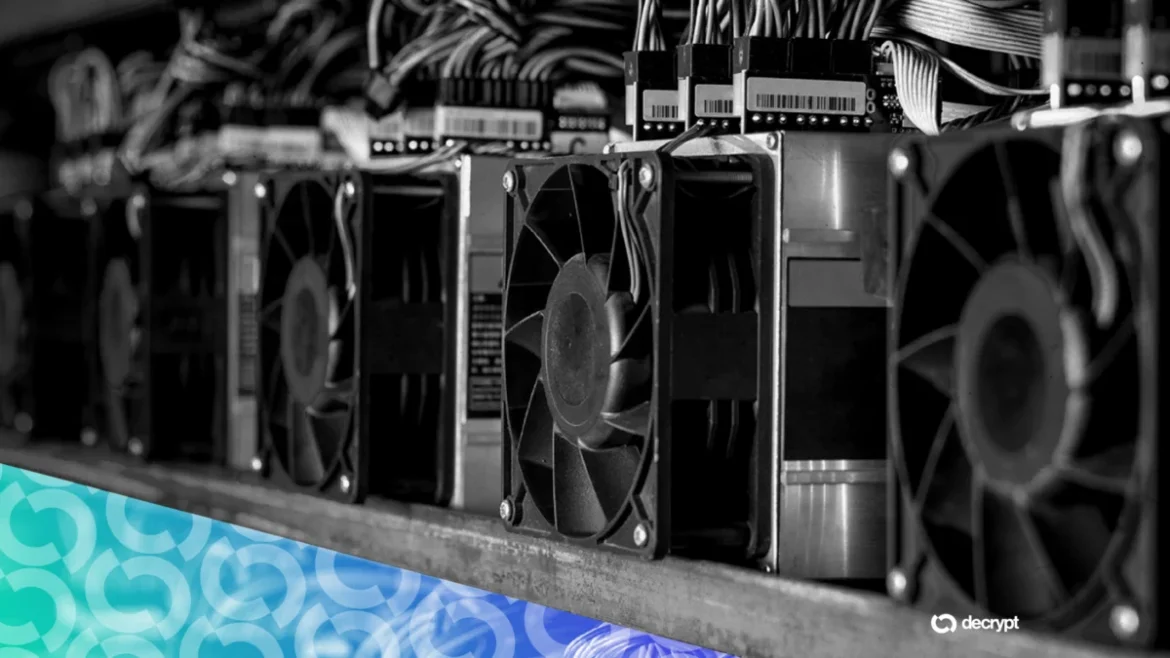
The intersection of cryptocurrency mining and artificial intelligence infrastructure continues to reshape the global technology landscape, with firms leveraging their existing high-power assets to capture lucrative enterprise clients. HIVE Digital Technologies, a prominent player traditionally recognized for its Bitcoin mining operations, is currently positioning itself to secure a lucrative $45 million in annual recurring revenue through a major artificial intelligence data center project located in Boden, Sweden. However, despite the substantial financial upside and months of active dialogue, the company has yet to execute a definitive, binding lease agreement with its prospective partner.
During its latest quarterly earnings presentation and subsequent call with financial analysts and investors, HIVE executives reiterated the immense potential tied to the 32-megawatt Big Boden facility. The projected $45 million revenue stream is predicated upon a long-term colocation arrangement spanning up to a decade. Yet, realization of this financial milestone is contingent upon several critical operational hurdles, including the finalization of a binding contract, the successful procurement of institutional financing, extensive physical upgrades to the existing facility, and the eventual commissioning of the project into active service.
Chronology and Development of the Boden Project
The strategic initiative in Sweden first came to public light in June, when HIVE formally announced that it had entered into a letter of intent (LOI) regarding a high-performance computing (HPC) colocation agreement. The prospective client is an unnamed, investment-grade Swedish technology enterprise seeking robust infrastructure capable of handling intensive artificial intelligence workloads.
As negotiations have progressed into the latter half of the year, the complexities of drafting a multi-million-dollar, multi-year infrastructure pact have come to the forefront. Speaking to stakeholders on Tuesday, HIVE Chief Executive Officer Aydin Kilic provided transparency regarding the ongoing negotiations. According to Kilic, both corporate entities are currently immersed in finalizing intricate contractual provisions, which include financial deposits, explicit termination rights, and other legal terms that could significantly influence overall financing costs. Demonstrating tangible momentum behind the scenes, Kilic noted that a lender’s independent consultant had traveled to the Boden site the previous week to conduct a comprehensive on-site evaluation, a standard prerequisite for securing project-level debt or credit facilities.
Despite market pressure to announce quick victories, executive leadership has adopted a measured
, risk-averse stance regarding the timeline. Kilic emphasized a disciplined corporate strategy, stating during the earnings call that the company refuses to rush into a premature deal merely for the sake of reporting short-term top-line revenue gains. Consequently, HIVE has not yet provided a definitive completion date for the ongoing lease negotiations, indicating that the legal and financial frameworks must be meticulously aligned before pen meets paper. Once the lease is officially executed, HIVE plans to aggressively pursue external project financing, with corporate bonds emerging as a primary vehicle to fund the necessary capital expenditures.
Transforming Crypto Assets into Advanced AI Infrastructure
The execution of the Boden project requires a fundamental architectural transformation. The physical facility must undergo a substantial industrial retrofit to accommodate up to 10,000 advanced Nvidia GB300 graphics processing units (GPUs). Because high-density computing racks generate immense heat and consume vast amounts of electricity, the retrofit plan heavily incorporates advanced liquid cooling systems to maintain optimal operational efficiency and hardware longevity.
While the physical utility connection at the Boden location boasts a capacity of 32 megawatts, the prospective enterprise customer is slated to receive approximately 25 megawatts of usable, dedicated computing capacity. The remaining power allocation will be strategically reserved to support the underlying mechanical, electrical, and operational infrastructure of the data center itself.
This structural pivot represents a continuation of HIVE’s corporate evolution. The Boden site itself is not entirely new to high-performance computing; it previously functioned as a GPU compute facility dedicated to supporting the Ethereum network before the blockchain transitioned to a proof-of-stake consensus mechanism. By repurposing legacy crypto-mining hardware and real estate for AI applications, HIVE is effectively insulating its business model from the notorious volatility of digital asset markets, creating a dual-engine corporate structure that blends crypto revenues with predictable, enterprise-grade cloud services.
Broadening the Horizon: The Shift from Bitcoin to AI Cloud
HIVE’s strategic pivot toward artificial intelligence infrastructure is part of a broader, industry-wide trend among publicly traded cryptocurrency miners. Facing compressed mining margins, high energy costs, and the impending financial pressures of Bitcoin halving cycles, miners possess a rare and valuable asset that tech giants desperately need: large-scale electrical power allocations and industrial real estate.
This transformation has already borne fruit for HIVE through several notable high-performance computing agreements. Most prominently, HIVE secured a major three-year AI computing contract in June involving telecommunications giant Bell Canada and artificial intelligence firm Cohere. That agreement encompassed the deployment of 2,304 Nvidia GPUs, serving as a landmark validation of the company’s diversification strategy.
Financially, HIVE’s aggressive expansion into the AI cloud sector has resulted in an impressive portfolio of contracted revenue. The company currently reports approximately $185 million in contracted GPU-cloud annualized run-rate revenue. However, a crucial distinction lies in operational deployment: only $40 million of that total is currently live and generating revenue. The remaining balance represents contracted capacity that is awaiting hardware delivery, facility readiness, and final integration into the network. Looking toward the horizon, HIVE has established an ambitious corporate target of achieving roughly $700 million in total high-performance computing annualized revenue by the end of calendar year 2028. Analysts note, however, that reaching this lofty goal will require substantial capital investments, continuous access to favorable financing, and a steady stream of new customer commitments.
Fact-Based Analysis of Implications and Market Outlook
The ongoing negotiations surrounding the Boden facility highlight both the immense opportunities and the operational complexities defining the current intersection of cryptocurrency mining and enterprise artificial intelligence. For HIVE Digital Technologies, the successful closing of the $45 million Swedish lease would serve as a powerful validation of its long-term strategy, demonstrating that former crypto miners can successfully pivot to become reliable infrastructure partners for investment-grade technology enterprises.
At the same time, the delay in finalizing the agreement underscores the rigorous due diligence demanded by institutional lenders and corporate clients in the AI sector. Unlike the fast-paced, spot-market nature of Bitcoin mining, enterprise AI deployments require multi-year commitments, strict Service Level Agreements (SLAs), and predictable uptime. Lenders scrutinize every contractual nuance—from termination clauses to collateral deposits—before unlocking the capital required to fund multi-million-dollar retrofits involving next-generation hardware like Nvidia’s GB300 GPUs.
For the broader market, HIVE’s journey reflects a permanent structural shift within the digital infrastructure asset class. As global demand for computational power continues to outpace the expansion of electrical grid capacities, industrial sites equipped with secure power and robust cooling solutions have emerged as premier real estate. Whether HIVE can successfully finalize the Boden lease and transition its multi-megawatt capacity from a letter of intent into an active, revenue-generating reality will serve as an important bellwether for the entire crypto-to-AI mining sector in the quarters ahead.
