The decentralized finance and non-fungible token ecosystems are currently grappling with a severe controversy surrounding the impending closure of the Abstract Layer 2 network. Developed by the team behind the globally recognized Pudgy Penguins project, Abstract was designed to serve as a high-performance Ethereum scaling solution tailored for consumer crypto applications. However, after two years of active development, ecosystem engagement, and user participation, the project leadership announced that the network would officially wind down operations by December due to an inability to achieve sustainable product-market fit or secure a competitive advantage in key market segments.
This abrupt strategic pivot has left thousands of early adopters, commonly referred to as "airdrop farmers," empty-handed. For the past 24 months, these participants dedicated substantial financial capital and operational resources to the network. They executed routine swaps, maintained active trading volumes, and provided vital liquidity—all under the prevailing web3 paradigm that early user contributions and accrued activity points (XP) would eventually be converted into a native network token. With the cancellation of the network launch, those XP points have been rendered entirely valueless, sparking intense community backlash and an informal yet highly coordinated demand for direct financial restitution from the Pudgy Penguins core team.
The Genesis of the Abstract L2 Initiative and User Expectations
To fully comprehend the depth of the current friction between the Pudgy Penguins team and their user base, it is essential to examine the historical trajectory of the Abstract ecosystem. Launched with significant fanfare, Abstract was positioned as a flagship Layer 2 network that would bridge mainstream consumer applications with the security guarantees of the Ethereum blockchain. The initiative was heavily backed by the reputation and cultural footprint of Pudgy Penguins, one of the most successful digital collectible brands in the history of the non-fungible token market.
During its two-year operational lifespan, Abstract relied heavily on the traditional airdrop farming model to bootstrap its network activity. In the modern blockchain economy, airdrop farming has evolved from a niche strategy into a multi-billion-dollar sector. Protocols and networks seeking to establish immediate market presence often incentivize early users with loyalty points—in this case, designated as XP. Participants engage in daily protocol interactions, staking maneuvers, and cross-chain bridging, operating under the implicit social contract that their upfront risk and provision of liquidity will be retroactively compensated when the network launches its native governance and utility token.
For Abstract, this meant that thousands of retail participants committed personal capital, often paying significant Ethereum gas fees to interact with early-stage decentralized applications hosted on the testnet and mainnet environments. These users acted as the lifeblood of the network, creating the illusion of a vibrant, high-velocity ecosystem that developers and institutional backers look for when evaluating project viability. However, the economic reality of maintaining an Ethereum Layer 2 network proved insurmountable. Facing stiff competition from established scaling solutions and specialized application chains, the project leadership concluded that Abstract lacked the necessary traction to justify continued operational expenditures.

The Core Grievances and the Call for PENGU Token Allocation
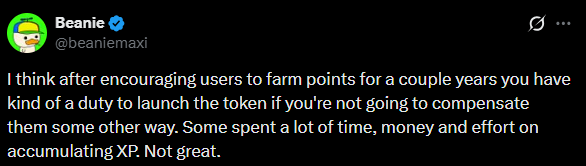
The announcement of the shutdown immediately transformed user frustration into organized resistance, spearheaded prominent venture capital figures and ecosystem participants. Leading the charge is Charles Moscoe, the founder of venture fund GM Capital, who communicates under the pseudonym Beanie Maxi on social media platform X. Moscoe and a coalition of disgruntled airdrop farmers argue that while a business failure is a recognized risk in the technology sector, leaving loyal users entirely uncompensated after years of unpaid labor and risk-bearing is fundamentally unjust.
The focal point of their demand centers around PENGU, the native token associated with the broader Pudgy Penguins ecosystem. PENGU features a total fixed supply of 88.88 billion tokens, of which approximately 70.7% is currently unlocked and actively circulating within the open market. The remaining 29.3%—equating to roughly 26 billion locked PENGU tokens valued at approximately $212 million based on prevailing market valuations—is presently earmarked for future distribution among the community, core team members, and dedicated liquidity operations.
Moscoe and his supporters have directly challenged the project leadership to reallocate a portion of these locked tokens to reimburse the Abstract XP earners. In a widely circulated public statement, Moscoe questioned the equity of the situation, noting that the core team has already generated substantial revenue from historical operations and token sales. He argued that utilizing a portion of the remaining locked PENGU supply to make early supporters whole is not only financially feasible but represents a moral imperative to preserve the brand equity and cultural goodwill of the Pudgy Penguins franchise.
Escalating Campaigns and Deepening Community Polarization
The controversy has rapidly expanded beyond individual complaints, transforming into a broader movement supported by various decentralized finance entities and community leaders. Organizations such as Kona DeFi have publicly endorsed Moscoe’s position, announcing plans to initiate independent "stimulator" campaigns aimed at drawing attention to the plight of abandoned XP holders and pressuring ecosystem stakeholders to intervene.
Community sentiment across major web3 forums reflects a profound sense of betrayal. Many participants note that while they understand the commercial realities of shutting down an uncompetitive business venture, the unilateral cancellation of token rewards after two years of daily engagement crosses an ethical boundary. Critics of the core team’s decision argue that airdrop farmers are treated as disposable capital sources during the growth phase and discarded without recourse when strategic plans change.
Conversely, distinct factions within the broader Pudgy Penguins NFT holder community have pushed back against the repayment demands. Many long-term digital collectible owners argue that the Abstract network was a distinct corporate entity and venture separate from the core intellectual property of Pudgy Penguins. They contend that diluting the PENGU token supply or diverting treasury allocations to appease speculative airdrop farmers would unfairly penalize existing token holders and NFT floor-price participants who bore different types of ecosystem risk. This ideological split highlights the complex governance challenges facing multi-token and multi-product crypto conglomerates, where the interests of NFT collectors, native token investors, and mercenary airdrop participants frequently collide.
Market Implications and Price Action for PENGU
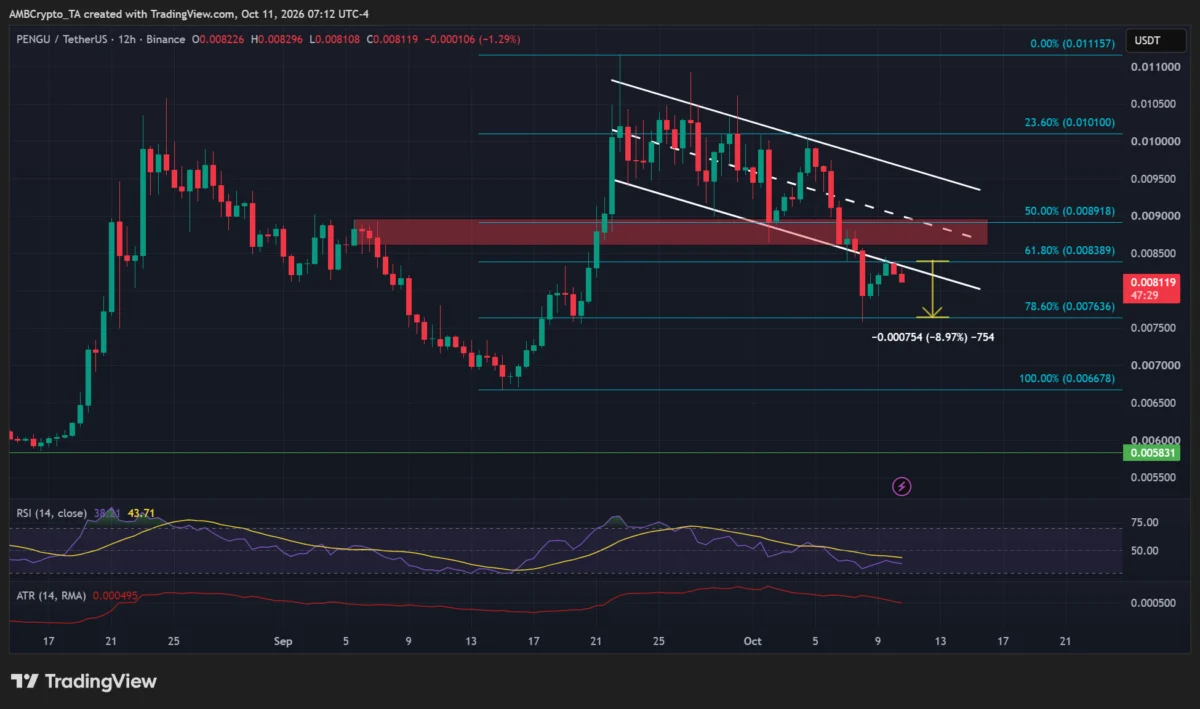
The ongoing public dispute has begun to manifest tangibly in the market valuation and trading dynamics of the PENGU token. Amid the escalating war of words and uncertainty surrounding token treasury management, PENGU experienced a measurable downward price correction, shedding approximately 2% of its value over a single trading session. Technical analysts monitoring the asset suggest that if the negative sentiment and organizational uncertainty persist, selling pressure could intensify, potentially driving the token down by an additional 9% to retest crucial psychological support levels near the $0.0076 threshold.
The broader implications of this standoff extend well beyond the immediate valuation of PENGU. The Abstract L2 controversy serves as a watershed moment for the practice of airdrop farming across the entire blockchain industry. For years, projects have relied on the promise of future token distributions to attract liquidity without offering legal contracts or binding commitments. The Abstract shutdown demonstrates the severe counterparty and execution risks inherent in this model. If projects can unilaterally cancel token generation events after years of community labor without providing any form of retroactive settlement, the trust foundational to bootstrapping new decentralized networks could be permanently fractured.
Outlook and Precedent for the Decentralized Web
As December approaches and the winding down of the Abstract network gathers pace, all eyes remain fixed on the Pudgy Penguins core team to determine whether they will issue a formal response or concession to the demands of the airdrop farming community. To date, official commentary from the leadership has been minimal, focusing primarily on the technical logistics of sunsetting the infrastructure rather than addressing the economic grievances of the user base.
Whether the core team chooses to compromise by allocating a slice of the remaining 26 billion locked PENGU tokens or decides to hold firm against the pressure will likely set a powerful precedent for the industry. In an ecosystem increasingly scrutinized by regulators and disillusioned by speculative excesses, how major web3 brands manage the fallout of failed technological ventures will dictate future standards of corporate governance, accountability, and community relations. For now, the impasse underscores the volatile intersection of community expectations, financial risk, and tokenomics in the modern digital asset economy.