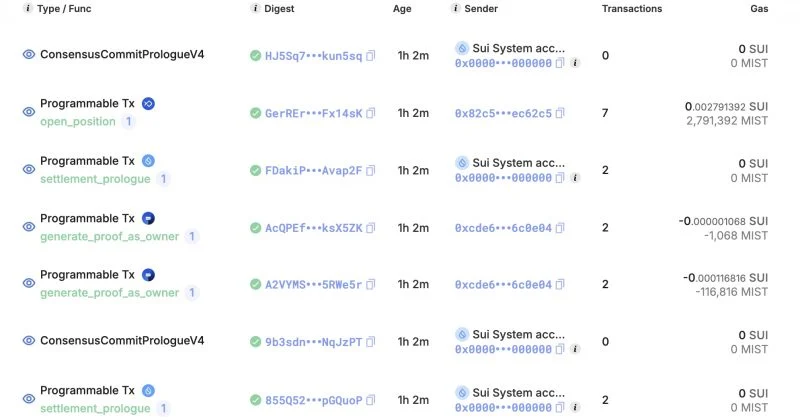
The Sui mainnet, a high-throughput Layer 1 blockchain designed to support demanding decentralized finance (DeFi) applications and attract institutional capital, experienced a significant disruption on May 29th, when its network came to a standstill for approximately 5 hours and 55 minutes. The prolonged outage was attributed to a critical bug in the gas charging logic introduced in the blockchain’s latest software release, version 1.72. This flaw, which affected the mechanism responsible for calculating transaction fees, led to a complete halt in the network’s ability to process new blocks and finalize transactions.
The incident began on May 28th, when validators running the problematic 1.72 update encountered the bug, causing them to cease the production of new checkpoints. Checkpoints are crucial for the network’s operation, signifying the finalization of a batch of transactions and the progression of the blockchain. Without these, the Sui network effectively froze, rendering it unable to process any new user activity. This meant that no new transactions could be finalized, leading to a complete cessation of network operations.
The recovery process was not instantaneous. Sui’s consensus mechanism, a sophisticated system designed to ensure network integrity and security, necessitates a supermajority of validators – specifically, those holding more than two-thirds of all staked tokens – to upgrade to a patched version of the software before the chain can resume normal operations. This requirement underscored the decentralized nature of the network and the importance of community coordination in resolving such critical issues. The arduous process of reaching consensus among a distributed network of validators for a software upgrade highlights the inherent challenges in maintaining the stability of large-scale blockchain networks.
Despite the extended downtime, the Sui network’s foundational safety guarantees remained intact. Crucially, no user funds were lost during the disruption, and the network’s architecture successfully prevented any data inconsistencies from arising while the chain was stalled. This is a testament to the robust design principles underlying the Sui blockchain, particularly its emphasis on immutability and the protection of user assets. However, the impact on the decentralized finance (DeFi) ecosystem built upon Sui was immediate and severe. Protocols operating on the network experienced a complete freeze; users were unable to adjust their positions, execute trades, or initiate liquidations. This paralysis within the DeFi landscape illustrates the interconnectedness of blockchain infrastructure and the applications that rely on it.
This recent outage is not the first instance of significant downtime for the Sui network in 2024. Approximately five months prior, on January 14th, Sui experienced a similar multi-hour stall, lasting around 6 hours. That earlier incident was caused by a different but equally critical issue: a consensus commit bug. The recurrence of such prolonged outages within a relatively short timeframe has raised concerns among investors and observers about the network’s stability and the effectiveness of its development and testing processes.
A Pattern of Disruption: Analyzing the Incidents
The pattern of two major outages, each lasting for several hours, within a span of roughly five months is a trend that is difficult to overlook. Both incidents share a striking similarity in their genesis: a critical bug introduced through a software update, followed by a complex and time-consuming process of coordinating validator upgrades across the decentralized network. This recurring scenario raises pertinent questions about the rigor of Sui’s pre-release testing protocols and its ability to preemptively identify and mitigate such vulnerabilities.
The market’s reaction to these disruptions has been swift and indicative of investor sentiment. During the most recent outage, the price of the native SUI token experienced a notable decline, falling to approximately $0.89. This represented a drop in the range of 6-8% from its pre-outage levels. While the token did exhibit a partial recovery once normal operations were restored, the price volatility underscores the market’s sensitivity to network stability and operational integrity. Such price movements serve as a real-time barometer of investor confidence and can provide valuable insights into market expectations regarding future network performance.
Implications for Investors and the Broader Ecosystem
Sui has strategically positioned itself as a high-throughput Layer 1 blockchain, a critical piece of infrastructure intended to power the next generation of decentralized applications, particularly within the demanding DeFi sector. The network aims to attract significant institutional capital, leveraging its purported scalability and efficiency. Since its mainnet launch, the total value locked (TVL) across the Sui ecosystem has seen substantial growth, reaching hundreds of millions of dollars, indicating a strong initial adoption and developer interest.
However, the recurring nature of these network disruptions poses a significant challenge to Sui’s aspirations. For potential institutional investors, who prioritize reliability and predictability, repeated outages can erode confidence and lead to hesitancy in committing capital. The DeFi space, in particular, relies heavily on continuous uptime and seamless transaction processing. Any interruption can result in financial losses for users and damage the reputation of protocols built on the platform.
For active traders and investors in the SUI token, the observed price action during the outage – a decline of 6-8% followed by a partial recovery – suggests a potential market playbook that may be repeated should a third incident of similar magnitude occur. This highlights the importance of risk management for investors in the volatile cryptocurrency market, particularly those invested in newer or rapidly developing blockchain ecosystems. The market’s reaction provides a clear signal that network stability is a key factor influencing the valuation of the SUI token.
Addressing the Root Cause: A Call for Enhanced Scrutiny
The specific bug that triggered the recent outage – a flaw in the gas charging logic within the 1.72 release – points to a fundamental issue in how transaction costs are calculated and processed. This aspect of a blockchain’s operation is paramount, as it directly impacts user experience and the economic viability of the network. A faulty gas mechanism can lead to unpredictable fees, denial-of-service vulnerabilities, and, as demonstrated, complete network paralysis.
The fact that this bug was present in a software release that made it to the mainnet suggests a potential gap in the quality assurance and auditing processes employed by the Sui development team. While software development inherently involves the risk of bugs, the severity and impact of the issues encountered by Sui warrant a thorough review of their development lifecycle. This includes an examination of:
- Code Auditing: The extent and depth of independent security audits performed on new software releases before they are deployed to the mainnet.
- Testing Methodologies: The comprehensiveness of testing frameworks, including stress testing, integration testing, and adversarial testing, designed to uncover edge cases and vulnerabilities.
- Staged Rollouts: The practice of gradually rolling out new software versions to a subset of validators or a testnet environment before a full mainnet deployment, allowing for early detection of issues.
- Community Feedback Mechanisms: The effectiveness of channels for community members and validators to report potential issues or concerns during pre-release phases.
The coordinated effort by validators to patch the software and restore the network is a positive indicator of the community’s commitment to Sui’s success. However, the responsibility ultimately lies with the core development team to implement robust measures that prevent such critical failures from reaching the mainnet in the first place.
Looking Ahead: The Path to Greater Resilience
For Sui to achieve its ambitious goals of becoming a leading Layer 1 blockchain capable of supporting large-scale DeFi and attracting institutional investors, it must demonstrate a higher level of operational resilience. The lessons learned from these recent outages are invaluable and should inform future development strategies.
Key areas for improvement include:
- Enhanced Testing and QA: Investing in more sophisticated testing tools and expanding the scope of pre-release audits to catch a wider range of potential bugs.
- Incident Response Preparedness: Developing and refining comprehensive incident response plans that allow for faster identification, diagnosis, and resolution of future network disruptions. This could involve dedicated teams, advanced monitoring tools, and clear communication protocols.
- Decentralized Governance and Upgrade Processes: While the current upgrade process is designed for security, exploring mechanisms that could expedite the patching and deployment of critical fixes without compromising decentralization or security could be beneficial. This is a complex balancing act, but one that is crucial for network uptime.
- Transparency and Communication: Maintaining open and transparent communication with the community regarding ongoing issues, recovery efforts, and the steps being taken to prevent recurrence. This builds trust and manages market expectations effectively.
The Sui network’s ability to recover from these significant disruptions showcases the underlying strength of its design and the dedication of its validator community. However, the recurring nature of these incidents serves as a stark reminder of the challenges inherent in building and maintaining a secure and reliable blockchain infrastructure. The future success of Sui will undoubtedly hinge on its capacity to learn from these experiences and implement robust solutions that ensure sustained uptime and foster unwavering investor confidence. The global blockchain ecosystem will be watching closely to see how Sui addresses these challenges and strengthens its position as a viable contender in the competitive Layer 1 landscape.